

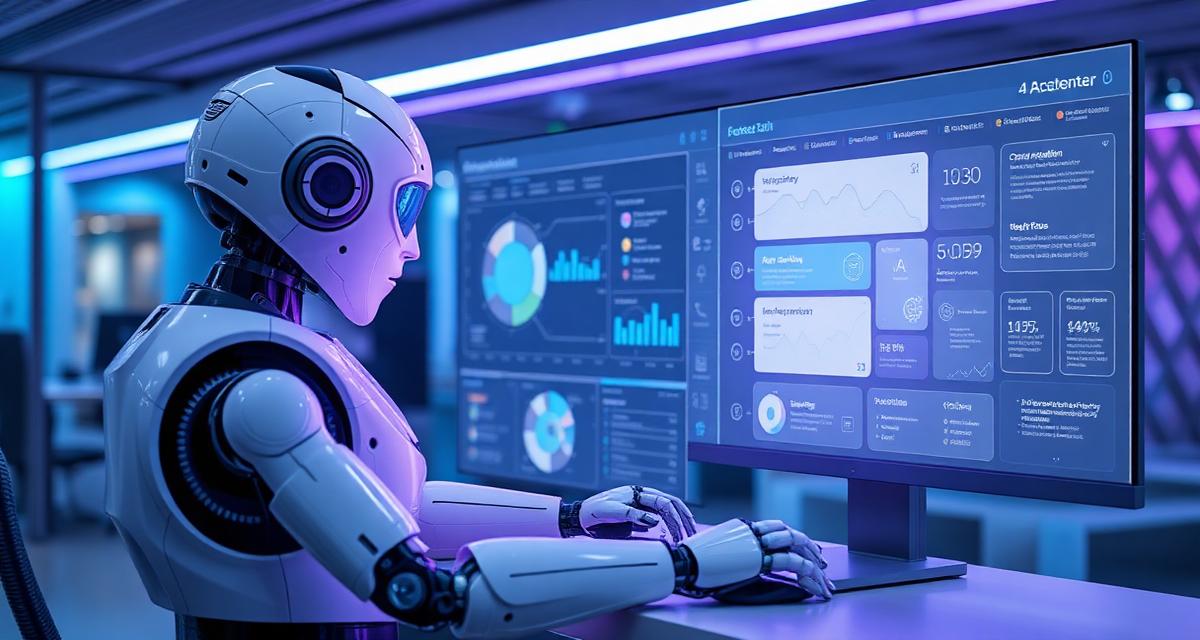
Artificial intelligence has evolved far beyond simple chatbots. In 2026, AI agents, autonomous programs capable of planning, reasoning, and executing multi-step tasks, are reshaping how we work, build businesses, and think about productivity. Unlike traditional software that waits for instructions, AI agents take initiative. They research, draft, schedule, code, and even collaborate with other agents to get things done.
From startups automating customer onboarding to developers shipping code faster, AI agents are becoming indispensable. This guide explores what they are, how they work, why they matter, and the specific tools you need to stay ahead. Whether you are a business owner, developer, marketer, or student, understanding AI agents is no longer optional. It is a core literacy for the next decade of work. Explore our curated list of best AI tools to get started.
We spent the past year tracking dozens of teams adopting agentic workflows, from solo founders to Fortune 500 enterprises. The patterns are remarkably consistent: agents save the most time when applied to the work people dread most. Inbox triage. Lead research. Status reports. Routine code reviews. The companies that move first are not just faster. They are reorganizing entire teams around what humans do best when freed from drudgery.
What Are AI Agents
An AI agent is an autonomous system that goes beyond generating text. It can perceive, plan, decide, and act. Think of it as a digital employee that can break a complex goal into smaller tasks, use tools like web browsers, APIs, and databases, execute each step independently, and learn from the outcomes.
For example, you might tell an AI agent: "Research the top 10 competitors in the SaaS analytics space, summarize their pricing, and draft a comparison blog post." The agent will autonomously search the web, extract data, organize findings, and produce a polished draft, all without you clicking a single button between steps.
The distinction between a chatbot and an agent matters. A chatbot answers a question and stops. An agent receives a goal and keeps going until that goal is achieved or it runs out of options. This subtle shift unlocks a completely new category of software, one where you define outcomes rather than instructions.
How AI Agents Work
AI agents combine several core capabilities into a single loop:
- Perception: They read inputs, user prompts, documents, API responses, or sensor data.
- Planning: Using reasoning models, they decompose goals into actionable sub-tasks.
- Tool Use: They call external tools, search engines, code interpreters, databases, and email systems to gather information or perform actions.
- Memory: Short-term and long-term memory lets agents maintain context across steps and sessions.
- Iteration: They evaluate results, adjust plans, and retry until the goal is achieved.
This loop, perceive, plan, act, evaluate, runs continuously, making AI agents far more capable than one-shot prompts. Pair them with AI productivity tools and you unlock an entirely new level of efficiency.
Under the hood, most modern agents are built on top of large language models like GPT-5, Claude, or Gemini. The model handles reasoning. A surrounding framework like LangChain, CrewAI, or LlamaIndex manages the tools, memory, and control flow. The result is software that feels less like a calculator and more like a colleague.
Benefits of AI Agents
24/7 Productivity
AI agents work around the clock without breaks, handling tasks overnight and across time zones.
Cost Reduction
Automate repetitive workflows to reduce labor costs and free your team for strategic work.
Faster Decision Making
Agents analyze data, generate reports, and surface insights in minutes instead of days.
Scalability
Deploy multiple agents simultaneously to handle parallel workstreams as your business grows.
Error Reduction
Consistent execution eliminates human errors in data entry, scheduling, and reporting.
Personalization
AI agents tailor communications, recommendations, and workflows to individual users.
Beyond these direct benefits, agents also unlock a hidden advantage: focus. When the brain space previously consumed by switching between trivial tasks is freed up, people produce dramatically better strategic work. The ROI on agents is rarely captured by a simple cost-per-task calculation.
AI Agents in Business
Businesses across every industry are deploying AI agents to streamline operations. Customer support teams use agents to resolve tickets autonomously, qualifying complex issues before escalating to humans. Marketing departments deploy agents that research keywords, draft campaigns, A/B test copy, and schedule social posts, all without manual oversight.
In finance, AI agents monitor transactions, flag anomalies, and generate compliance reports. In HR, they screen resumes, schedule interviews, and onboard new hires. The common thread: AI agents handle the repetitive cognitive work so humans can focus on strategy, creativity, and relationship-building. Explore powerful AI business tools to transform your workflow.
A practical pattern we see across high-performing teams: start by mapping every recurring meeting and report inside the company. Each one is a candidate for partial or full agent automation. A weekly competitor scan, a monthly customer satisfaction summary, a quarterly investor update. Each can be handled by an agent that pulls data from the same sources a human analyst would, then writes a draft for review.
AI Agents for Developers
Developers are among the biggest beneficiaries of AI agents. Coding agents like GitHub Copilot Workspace and Cursor can read an entire codebase, plan refactors, write tests, fix bugs, and open pull requests autonomously. DevOps agents monitor infrastructure, auto-scale resources, and remediate incidents before engineers even notice.
Frameworks like LangChain and CrewAI allow developers to build custom multi-agent systems where specialized agents collaborate. One researches, another writes code, a third reviews it. This "team of agents" pattern is rapidly becoming the standard for AI-native software development. Students can also leverage these tools. Check out AI tools for students to learn more.
The most interesting shift for developers is not the speed of writing code. It is the type of code being written. With agents handling boilerplate, scaffolding, and repetitive maintenance, human developers spend more time on architecture decisions, performance optimization, and the truly novel problems that only humans can frame correctly.
AI Agents for Remote Teams
Distributed teams are uniquely positioned to benefit from AI agents. The friction of working across time zones, async communication, and information silos is exactly what agents are good at smoothing out. A meeting recorder agent can transcribe every call, summarize action items, and post them in the right Slack channel before anyone wakes up the next morning.
Project management agents can keep tickets, docs, and roadmaps in sync without anyone manually updating three different tools. Sales agents can qualify inbound leads at 3 AM in Singapore so the West Coast rep wakes up to a clean queue. The compounding effect of these small wins is enormous in a globally distributed company.
Adoption Challenges to Plan For
Adopting agents is not a free lunch. The most common mistake teams make is treating an agent as a magic intern that can be trusted on day one. In reality, agents need careful onboarding, just like a new hire. Define clear scopes. Build a feedback loop. Review outputs early and often.
Three challenges deserve specific attention. First, governance. Who owns what an agent does on behalf of the company? Establish clear policies before you scale. Second, data security. Agents touching sensitive systems must be sandboxed and logged. Third, the human factor. Some teammates will worry about being displaced. The most successful adoption stories are the ones that explicitly position agents as a tool that makes existing employees more valuable, not a replacement strategy in disguise.
The Future of AI Agents
The trajectory is clear: AI agents will become the default interface between humans and digital systems. By late 2026 and into 2027, expect agents that manage your calendar, inbox, and finances simultaneously, negotiate with other agents on your behalf (scheduling meetings, comparing vendor quotes), operate physical systems through robotics integration, and self-improve by training on their own performance data.
The organizations that invest in understanding and deploying AI agents today will have a compounding advantage. The skills to build, manage, and collaborate with AI agents are becoming as fundamental as spreadsheet literacy was two decades ago. We are also entering a phase where agents start communicating with other agents directly, with humans setting the rules and reviewing the most important outcomes. That is a meaningful change in how organizations are structured, and the early movers will define the playbook.
Final Thoughts
The story of AI agents in 2026 is not really a story about technology. It is a story about people choosing what is worth their attention. Agents handle the work that used to fill calendars with low-value drudgery. Humans take back the parts of work that humans have always been best at: judgment, taste, relationships, and bold creative bets.
The fastest way to start is to pick one workflow, deploy a single agent, and ship it. Learn what works. Iterate. Within a few cycles you will have a clear, lived sense of what these tools can and cannot do for your specific situation. That is worth more than any number of articles, ours included.
Written by the Kite AI Tools Team
Our editorial team researches, tests, and reviews AI tools to provide accurate, helpful content for professionals, students, and business owners. We focus on practical insights that help you make informed decisions about the tools you use every day.
Learn more about our team